
Post-Traumatic Stress Disorder (PTSD) & Stellate Ganglion Block
Post-Traumatic Stress Disorder (PTSD) is a mental health condition that can occur after an individual experiences or witnesses a traumatic event. It is characterized by a range of symptoms that can significantly impact a person’s daily life and overall well-being.
What is already known about this subject?
► Exaggerated hyperarousal is an independent predictor of non-response to standard post-traumatic stress disorder (PTSD) treatment.
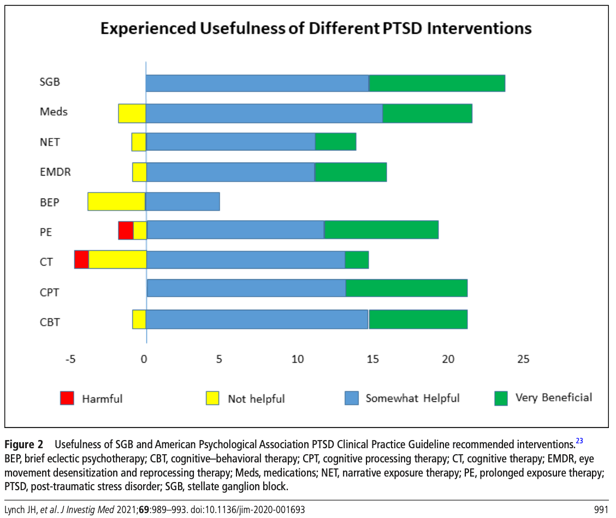
► For over 100 years, a simple, safe procedure called stellate ganglion block (SGB) has been used successfully to treat a variety of sympathetically modulated pathologies (eg, chronic regional pain syndrome, postherpetic neuralgia), and over the past 10 years SGB has also been used in some locations to treat post-traumatic
stress symptoms with a success rate of
approximately 70%–80%.
► Fourteen peer-reviewed publications
since 1990 support SGB’s safety and effectiveness in the successful treatment of PTSD symptoms across a variety
of patient demographics and trauma etiologies, but what has not been identified is how best to integrate SGB into standard trauma-focused treatment.
What are the new findings?
► When surveyed, from a sample of behavioral health clinicians who have experience with SGB for PTSD, 96% identified ‘Arousal/Reactivity’ as the symptom cluster most improved following treatment with SGB.
Symptoms:
Intrusive Memories:
- Recurrent distressing memories or flashbacks.
- Nightmares about the trauma.
Avoidance:
- Steering clear of reminders or discussions about the trauma.
- Avoiding places or people associated with the event.

Other Symptoms:
Negative Changes in Thinking and Mood:
Persistent negative thoughts about oneself or others.
Feelings of hopelessness or detachment.
Difficulty experiencing positive emotions or recalling details of the trauma.
Altered Arousal and Reactivity:
Irritability, aggression, or hypervigilance.
Difficulty concentrating and sleep disturbances.
Causes:
PTSD can develop after experiencing or witnessing a variety of traumatic events, such as:
- Combat exposure or military trauma.
- Sexual or physical assault.
- Natural disasters (e.g., hurricanes, earthquakes).
- Serious accidents (e.g., car crashes).
- Sudden loss of a loved one.
- Any event that causes significant emotional distress.
More Links: https://pubmed.ncbi.nlm.nih.gov/38811568/
Other Conditions


